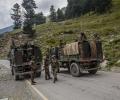
Top commanders of the Army on Thursday carried out a comprehensive review of India's overall security challenges including in eastern Ladakh as well as other sensitive areas along the Line of Actual Control with China on the first day of a two-day conference, people familiar with the development said.
He said that in recent times, based on the important consensus reached by the leaders of the two countries, China and India have maintained close communication on the border situation through diplomatic and military channels and achieved great progress.
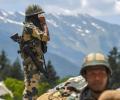
Gen Naravane said India is dealing with China in a "firm" and "non-escalatory" manner to ensure the sanctity of its claims in eastern Ladakh, and that it was even open to initiating confidence-building measures.
Defence sources stated that the disengagement involves removing infrastructure and withdrawing troops from both sides. The process is expected to be completed by Tuesday.
We hope that the two sides will work in concerted efforts to achieve the goal, Chinese Foreign Ministry spokesperson Hua Chunying said

Chief of Army Staff Gen Manoj Pande has carried out a comprehensive review of India's military preparedness along the Line of Actual Control (LAC) in Arunachal Pradesh in his first visit to the border state after last month's clash between Indian and Chinese forces in the Tawang sector.

The sources said Singh will carry out a comprehensive review of the security situation in the region with Gen Naravane, Northern Army Commander Lt Gen Yogesh Kumar Joshi, Commander of the 14 Corps Lt Gen Harinder Singh and other senior army officials.

Chinese foreign ministry spokesman Geng Shuang told a media briefing in Beijing that "at the moment the situation in the boundary region between China and India is overall stable and controllable".
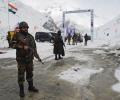
External affairs ministry spokesperson Arindam Bagchi said it is essential that "appropriate agreements between India and China of 1993 and 1996 are scrupulously followed".

Out of 18, four personnel were critically injured but they are responding to treatment and are stable now, people familiar with the matter said.

India will look at disengagement and de-escalation of the situation along the Line of Actual Control (LAC) in eastern Ladakh after restoration of the status quo of April 2020, Army Chief General Upendra Dwivedi said on Tuesday, a day after New Delhi announced striking an agreement with Beijing to end the over four-year border row in the region.
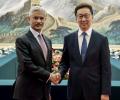
India and China should build on 'good progress' in normalising the bilateral ties to address border-related issues including de-escalation, and it is essential to avoid 'restrictive trade measures and roadblocks', External Affairs Minister S Jaishankar said on Monday during talks with his Chinese counterpart Wang Yi.
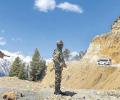
China and India have agreed to work to maintain peace along the Line of Actual Control and resolve the border standoff through talks while implementing the consensus reached between the two countries' leadership that 'differences' do not escalate into 'disputes', a top Chinese official said.

The habitats have been provided with proper heating facilities as the region receives up to 40 feet of snow after November every year while temperatures fall up to minus 40 degree Celsius in the winter months.
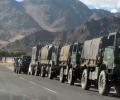
According to estimates, both India and China have deployed more than 50,000 troops in the Eastern Ladakh sector opposite each other despite the limited disengagement in the Pangong lake sector by both sides earlier this year.

The sources have said that patrolling will begin at these points once the disengagement that began last week is completed and both sides will move their respective troops and dismantle temporary structures.
The DG of the ITBP said his troops have been provided with special winter clothing and nutritious food as they brave the severe chill in eastern Ladakh where the armies of India and China are locked in a tense standoff for over six months. He said 'strains in bilateral relations are already evident but we are confident these will be sorted out peacefully very shortly'.

'Once positions are hardened and troops start building defences, it is difficult for soldiers to step back.'

Corporal Wang Ya Long was handed over to the Chinese military on Tuesday night at Chushul-Moldo border point in eastern Ladakh, the sources said in New Delhi.

India and China have implemented a pact on patrolling in Depsang and Demchok along the Line of Actual Control (LAC) in eastern Ladakh, as per agreed modalities and timelines. The agreement was reached on October 21 and includes provisions for disengagement and patrolling in the last two friction points in the region. The pact has been effected and implemented as agreed, with both sides resuming patrolling activities and grazing, where applicable, as per longstanding practice before the friction began. The terms of the disengagement agreements reached prior to the latest pact continue to hold in relevant areas in eastern Ladakh. The agreement applies mutually to both sides and is without prejudice to India's positions on the LAC or boundary lines. India and China are each carrying out one round of patrolling in Depsang and Demchok, but they have maintained their deployment of troops along the LAC. The focus now is on de-escalation of the overall situation. The agreement was endorsed by Prime Minister Narendra Modi and Chinese President Xi Jinping in a meeting in Kazan, Russia, signaling attempts to normalize ties.

India recently outflanked China by taking control of strategic height near Pangong lake's southern bank.

China on Tuesday announced that its Defence Minister General Li Shangfu will visit India this week to attend the meeting of SCO defence ministers from April 27 during which he is expected to hold talks with his Indian counterpart Rajnath Singh on ending the prolonged eastern Ladakh standoff which has severely strained bilateral ties.

This is the first time that the defence ministry has admitted officially about the transgressions by the Chinese troops.
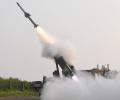
'China is in the middle of a substantial expansion of its nuclear weapon arsenal, which satellite images indicate includes the construction of over 300 new missile silos,' SIPRI's statement noted.
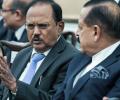
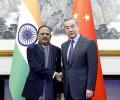
National Security Advisor Ajit Doval is likely to travel to Beijing within the next few weeks to lead the Indian delegation at a new edition of the Special Representatives dialogue on the larger boundary question that will be held after a gap of nearly five years, authoritative sources said.

The talks came a day after the two armies began a limited disengagement in a few areas in Galwan Valley and Hot Spring in a demonstration of their intent to end the row peacefully.

Chinese Foreign Minister Qin Gang will travel to India to attend the Shanghai Cooperation Organisation (SCO) foreign ministers' meeting being held in Goa on May 4 and 5, the foreign ministry in Beijing announced on Tuesday.
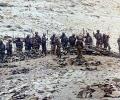
India on Thursday blamed China's actions of amassing a large number of troops close to the border and attempts to unilaterally alter the status quo along the Line of Actual Control (LAC) last year for the continuing military standoff in eastern Ladakh, and asserted that these acts were in violation of Sino-India bilateral agreements.

The capture of the Chinese soldier comes in the midst of an eight-month-long bitter border standoff between the two armies in eastern Ladakh.

The last conversation between the two leaders was on April 4 on the issue of hydroxychloroquine.

'The Chinese are retaining geostrategic pressure on India by keeping troops there and building infrastructure continually.'
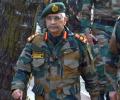
Gen Naravane reviewed the overall security situation in the region with Northern Army Commander Lt Gen Yogesh Kumar Joshi, commander of the 14 Corps Lt Gen Harinder Singh and other senior Army officials.

'There is a sense of realism in the Pakistan army that if they needled India during the Ladakh standoff, they would have seen a strong retaliation.' 'Pakistan was hoping that India would come out looking weaker in the region and get embarrassed, but that obviously has not happened.'
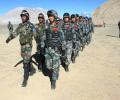
Sources said that after the June 6 talks between Military commanders followed by other rounds of talks, there has not been any considerable build-up activity by both sides and Chinese aggressive behaviour has also been toned down, they said.

In its first official account of the standoff between the two militaries, the ITBP revealed how its troops "not only effectively used shield to protect themselves but also responded fiercely to advancing PLA (Chinese People's Liberation Army) troops and brought the situation under control". "The ITBP has recommended the names of 21 men who faced the Chinese during the face-offs and skirmishes in May-June this year for gallantry," it said.
'India will always remain indebted for their supreme sacrifice. Entire nation and Modi government stands firmly with their families in this hour of grief. Praying for the speedy recovery of those injured,' he said.
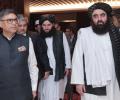
India's Foreign Secretary Vikram Misri has arrived in Beijing for a two-day visit during which he will hold talks with Chinese officials. The visit comes amid ongoing efforts to de-escalate tensions along the Line of Actual Control (LAC) in eastern Ladakh and to resume bilateral cooperation in various fields, including the Kailash Mansarovar Yatra.

'Disengagement is merely the first step in a lengthy process of arriving at a new normal along the LAC in Eastern Ladakh and the entire land boundary.' 'The Indian government should insist on the restoration of the status quo ante in Eastern Ladakh.'

It was the second time in the last three days that India asserted that the relationship with China depends on the resolution of the pending issues in eastern Ladakh.

Singh, accompanied by Army Chief Gen Manoj Pande, also carried out a comprehensive review of India's military preparedness along the Line of Actual Control (LAC) in Arunachal Pradesh and lauded the troops for guarding the border with "unwavering commitment and unparalleled courage."
